

Bargaining (and Striking) for the Common Good Works!
Local unions in four Massachusetts communities wield the power of social justice unionism for the good of educators, students, and communities
by Mitch Snow
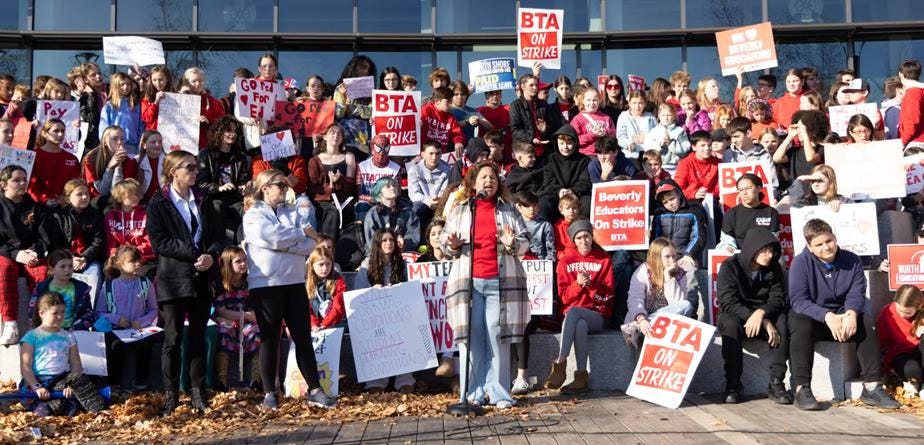
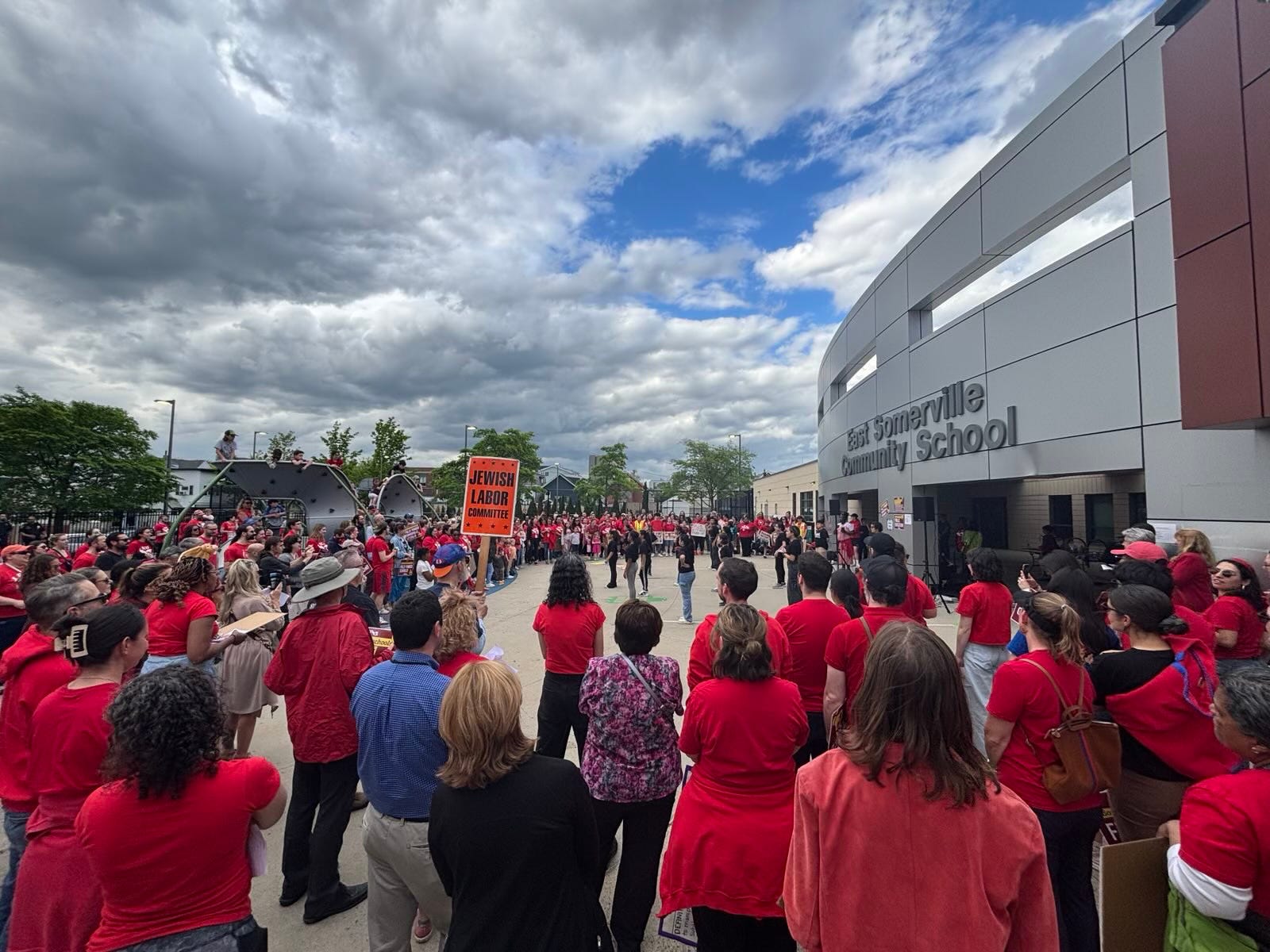
Groundbreaking contract agreements won through three coordinated strikes on the North Shore of Massachusetts show the power of principled, strategic organizing using the framework of Bargaining for the Common Good. Less than a year after the three strikes, educators in Somerville, along with parent and community allies, won a lighthouse contract setting new standards for student supports, common good language, and educator/community benefits across the state.
Three Unions Strike for the Common Good on the North Shore
In November 2024, defying a law banning public sector strikes, three local North Shore education unions (Marblehead, Beverly, and Gloucester) representing almost 2,000 educators voted to strike within 24 hours of each other. Educators were fighting for living wages for education support professionals, paid parental leave, higher teacher salaries, safety for students and educators, and smaller class size and student ratios for special service providers. Social justice unionism, deep organizing through one-to-one conversations, and bargaining for the common good were central to these strikes.
The strikes resulted in huge economic, safety, and parental leave gains for all three locals—far more than what was on the table before the strikes. They led to some of the top contracts in the state, despite these towns saying they were too poor to fund their schools mere days before the strikes. Before 2019, average cost of living adjustments for educator contracts were around 2% per year. In each of these three strikes, educators won double-digit increases over three years and have created space for many more unions and districts to gain similar increases. Of particular note are the economic gains for education support professionals, who have seen increases of 60% or more to wages in one contract.
What were educators fighting for?
Safety for students and educators: Incidents of assaults on educators and unsafe situations for students have skyrocketed in recent years across the country. Educators on the North Shore fought over proposals centered on real, enforceable protocols for handling unsafe situations and staffing to ensure these situations are less frequent.
Lower class sizes and student ratios for mental health/service providers: Seeing and being unable to address the needs of students is a major driver of misery and anger for educators. Caseloads are simply too high to deliver the needed, or even legally required, services for each student.
Living wages for education support professionals: Wages for education support professionals have been criminally low for years. In Marblehead, for these staff who provide vital one-on-one adaptation and implementation of material for students with special needs, as required by law, the average wage before the strike was $17,000 a year, with a starting wage of just over $11 an hour. For context, the median home price was over $1 million.
Paid parental leave: In Massachusetts, municipal employees were excluded from the 2018 law guaranteeing paid family and parental leave. As a result, while workers in the private sector are guaranteed 26 weeks of paid family leave, educators who spend their days with children were guaranteed zero weeks and are forced to use their own sick time to take time off to be with new children.
Salaries and the teacher pay gap: In a state with one of the highest costs of living in the world, educators cannot afford to live in the communities where they teach. Nationally teachers make 26.4% less than equivalently educated/skilled professionals. This gap is 19.9% in MA. This gap is one of the causes of the nationwide educator shortage, which exacerbates the safety and workplace issues faced by educators in schools on a daily basis.
Strategies
Bargaining and organizing for the common good. This strategy takes a holistic approach to workplace issues: workplaces are part of the community, not stand-alone entities divorced from their surroundings. Schools showcase the oppressive systems/needs of a community. Parents, teachers, students, and community organizations need to band together to work for long-term structural changes they want to see in their communities. Bargaining for the common good has seven key components:
Expand the scope of bargaining beyond wages and benefits
Go on offense in your campaign by identifying, exposing, and challenging the real opposition
Engage community allies as partners in issue development and the bargaining campaign
Center racial justice in your demands
Strengthen internal organizing, membership and member engagement
Leverage capital in our campaigns
The campaign doesn’t end once the union settles its contract
The North Shore unions’ common good proposals marshaled support from students, parents, and community members, and made educators feel proud about what they were fighting for. The unions showed, for example, that more prep time for teachers meant more recess time for students, increased staffing meant increased services and safety for students, and better wages meant better staff retention.
Community organizing was undertaken early, centering students and low-wage worker voices in communications and imagery. Parents were invited into the bargaining room and featured at rallies and press conferences, demonstrating public support for educators’ proposals. Educators worked with students, who organized walkouts before each strike.
One key moment of the strike in Marblehead was when several sports teams had important games during the course of the strike. The union strategically and publicly allowed teachers to cross the picket line to coach teams who were in a once in a lifetime moment, winning significant student and parent support. When the district banned educators from coaching, effectively locking out educators, many more parents and students saw the move as vindictive and expressed increased support for the strike.
Structure testing. Structure tests answer the question “How strong are our forces?” Leading up to the strikes, the unions consistently used these tests to measure majority involvement. Before any public membership votes, one-on-one conversations took place with 100% of the membership on the bargaining platform, beginning work to rule, deciding to organize towards the strike, and ultimately the strike vote.
Wielding labor solidarity across unions and towns. A formation called “North Shore Educators United” connected leaders from the different unions. At retreats and meetings, “workers teaching workers” allowed members to receive and lead common training and advance a shared, escalating timeline. Unions conducted joint actions such as purchasing billboards, conducting walk-in days, and coordinating work-to-rule votes.
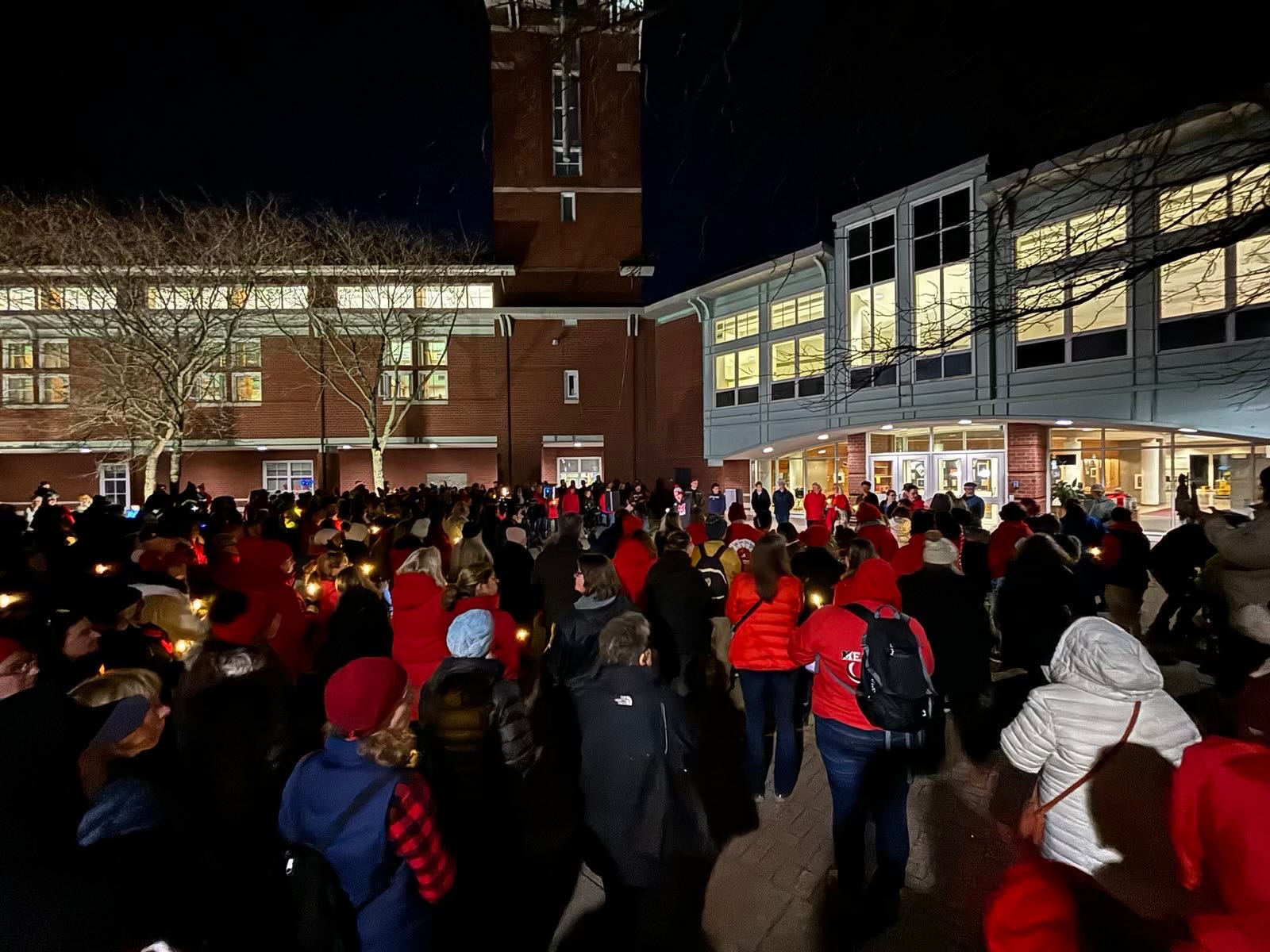
High-profile, clear strike structure and communication. Every day of the strike the unions held pickets in the mornings and local events, like rallies, to end the day. Participation remained above 90% every day of these grueling strikes. Rallies generated press coverage and kept spirits high, especially after the first week. Participation of community members, elected officials, and students provided huge morale boosts. High-profile progressive legislators provided statements of support, while the unions organized actions targeting “bad actor” electeds (such as the mayor of Gloucester who in a viral moment “flipped the bird” to educators). Members of the clergy created moments for spiritual grounding and claiming the moral high ground—writing op-eds, organizing vigils, and making calls to politicians in support of the educators.
Transparency. The unions shared all proposals and responses in documents available to the general public. Members of the organizing team and bargaining teams checked in multiple times per day, coordinating a joint membership update and press conference for the media every night of the strike. Educators wanted the public to know what they were fighting for and how it was going. This contrasted starkly with lack of communication by the employers, increasing community support for the strikes and the educators’ demands.
Strengths and obstacles
These strikes struck powerful blows against municipal and state powerbrokers who beforehand enjoyed a monopoly over the structure of town finances and education policy. Educators learned to see themselves as part of a broader working class who were having to force their way into the halls of power.
Increased union membership. The strikes saw huge membership growth, and in particular showed a path for increasing membership among support workers and lower-wage workers. Members flock to joining fighting unions. For example, Marblehead membership went from 270 to 371 in the four weeks before the strike, almost entirely in the units of substitutes, tutors, and education support professionals. Building clear fights centered on a vision for public schools and communities provide a powerful remedy for the 2018 Janus Supreme Court decision, intended to weaken and bankrupt unions by allowing workers to opt out of unions while still receiving benefits.
Democratization of union leadership. In a strike context, the number of members feeling “they are the union” increases rapidly out of necessity. The skills of these leaders also increase exponentially. One of the North Shore unions went from 10 leaders with three key decision makers pre-strike to 40 leaders with a core group of 20 key leaders. What’s more, each striking local has sent delegations to statewide trainings to “spread the gospel” following a successful strike. This network of leaders is growing and remaining in contact after each action, forming an educator army for the public good.
Class Consciousness. Educators exited strikes and entered into next tasks with a deepened sense of grievance and agitation over austerity, neoliberal state policies bankrupting schools and attacking workers, and centrist Democrats and Republicans. Collectively, the three unions were fined more than $1 million dollars for breaking the law against striking, far more than any of them had in their treasuries. Meanwhile, school committees who had refused to bargain in good faith for months, and a law firm that profited more than $1 million dollars from advising these towns during the strike, were not penalized by the state at all. The state was weaponized to try to compel educators to accept substandard contracts and return to the classroom.
Midway through the strike, the three locals’ presidents had a conversation with “progressive” governor Maura Healey who, after hearing about educators having miscarriages at work and not being able to afford to keep their homes, simply stated, “You need to go back to work for the sake of the children.” The three women presidents of these small unions fired back, “That is completely unacceptable, you say you support women, so do it.” Not a single member of these unions believe that the governor of Massachusetts took their side. A deeper understanding of where politicians' allegiances lie is now paving the way for each of these unions to build a political arm independent of the Democratic Party.
At the same time, the strikes revealed some important obstacles needing continued fightback:
Insulation of electeds. Despite recall petitions, clear isolation, and public opinion in favor of educators, many of the local decision makers remained relatively insulated, heading out on vacation or continuing their private businesses. The town manager/mayor and school committee members involved in each fight held strong on austerity talking points and while they were compelled to capitulate to settle the strikes, deep reserves of cash were left untouched.
Strength and anti-worker position of the state apparatus. The Commonwealth Employee Relations Board (CERB) ruled against unions at every turn, even ruling that the employers no longer had to bargain in good faith. The courts issued injunctions and coercive actions, proving entirely unsympathetic to arguments of fairness, justice, or the need for municipalities to follow the law. In the face of a worker uprising they unified to quell it.
Persistence of grossly inadequate wages. No union achieved close to a living wage for their education support professionals as defined by the MIT living wage calculator (between $50k and $70k a year). Most will continue to live in poverty and/or leave education for other jobs. It wasn’t until the 2025 Somerville settlement that even a modest minimum wage of $50,000 a year for paraeducators was achieved.
Politicians and plutocrats find novel ways to attack educators/workers. Just as educators have been learning from each other about how to best fight for their students and communities, so have the bosses been colluding with agents of the state to try to shut down the educator strike wave and regain control over municipal and state finances. In particular in 2024 we saw four different strategies–three of them on the North Shore:
Right-wing attorneys filed lawsuits targeting the local, statewide, and national unions. A right-wing Chicago attorney, Daniel Suhr of Hughes and Suhr Law, found three groups of parents after a strike in the city of Newton to sue the union for more than $20 million in “damages” done to students for missed school days. A judge in Massachusetts Superior Court dismissed the lawsuit in July 2025.
In Marblehead, the strike petition filed by the town named individual educators, not in their capacity as union leaders, but as individuals breaking the law. This led to individual court orders and then threats of fines and arrest. This generated feelings of fear and isolation, as well as righteous indignation at the personal attacks.
In Gloucester, the town immediately withheld pay, holding back paychecks for hourly and salaried employees, intending for mounting bills to force educators to give up on their vision for the schools.
In Beverly, the town refused to negotiate at all with educators and sought a decision from the CERB relieving them of the legal obligation to bargain in good faith. CERB did issue this opinion in the midst of the strike, though the power of the strike compelled school committee members back to the table to settle the strike. Of note,the most progressive member of CERB had recently retired and had not been replaced.
The simultaneous use of three different strike-breaking strategies in the North Shore communities indicates a high level of coordination between the employers and law firms. Educators will be expecting some combination of these tactics to be employed in any future strikes.
And yet, when educators fight (and strike) for the common good, they win (just take a look at this history of Massachusetts educator strikes). By Thanksgiving, the North Shore strikes were done, the local unions owed more than $1 million in fines to the state—but educators had won key safety provisions, huge wage increases, paid parental leave, and increased student supports (see table below). Educators carved turkeys at home next to thank you cards and food dropoffs from students, parents, and local businesses grateful for their sacrifice.
Victories from the North Shore strikes
Beverly (12 day strike)
Huge wage increase for paraprofessionals (between 75% and 100% wage increase) up to $33,500-42,500 from $20k-25k
12 weeks paid parental leave (six not from sick leave) available to all parents regardless of gender
Translation and interpretation pay to better support students and families of diverse backgrounds
A true voice on a school committee subcommittee with a non-voting seat
Many special education wins, including more time for progress and IEP reports, college credit recognition for service providers, and more
Increased community and union solidarity that will lead to municipal political change
Over 16% salary increase for the majority of teachers
Marblehead (11 day strike)
Huge wage increase for paraprofessionals and tutors, in many cases doubling salaries
Increased trainings on social/emotional needs of students, with educator input on all trainings
Joint Committee on School Safety reporting publicly on progress to keep students and staff safe
12 weeks paid parental leave (three not from sick leave) available to all parents regardless of gender
Pathway for guaranteeing 30 minutes of recess every day for all students
Increased community and union solidarity that led to ousting problematic school committee members
Over 16% salary increase for the majority of teachers
Gloucester (10 day strike)
Huge wage increases for paraprofessionals, setting a starting salary above $30,000 (nearly 33% increase)
New school-based and district-wide safety teams to track safety data and provide support
12 weeks paid parental leave (seven not from sick leave) available to all parents regardless of gender
Increased educator-directed time to collaborate with colleagues and plan lessons
A joint working group to deepen student learning and improve student achievement
15.8% increase to teacher salaries
Somerville, MA: Common Good and Strike-Ready Means Big Wins for Educators and Families
On June 23, 2025, the Somerville Educators Union (SEU), a Massachusetts Teacher Association affiliate, won new three-year contracts for each of its three bargaining units: teachers, paraprofessionals, and family liaisons and supervisors of school attendance. The contracts are filled with advances for everyone: huge wage increases ($50,000 minimum for paraprofessionals), 12 weeks paid parental leave (all 12 paid by the employer and not from sick leave, the largest in the state), protections for immigrant educators and students, climate change provisions, school safety guarantees, and diversity hiring requirements.
Educators organized for more than six years in Somerville to win transformative contracts for their students and communities. At the beginning of the process, contested elections for union leadership forced educators to organize and choose between a “service” model of unionism, focused solely on teachers, and a “social justice” model focused on the common good. A social justice union model prevailed, making other steps possible. The SEU then worked to elect socialist and progressive candidates for city council and school committee.
With its new progressive leadership, SEU began treating its three different groups of workers with three different contracts as one union during negotiations, unifying workers across all nine different school sites across the city with one vision. The union brought hundreds of “silent bargaining representatives” to each bargaining session; these representatives included rank and file educators, parents, community members, elected officials, and educators from other towns. The union made significant efforts to organize with parents and community members—and not just as people to support the union’s actions. The union fought back against arbitrary rules from the city excluding parents from the bargaining room, for instance. Parents were active in the bargaining process, through activities such as proposal writing, participating as silent bargaining reps, and attending regular community office hours.
Using the momentum from packed bargaining sessions, the SEU would task a team of organizers with having one-on-one conversations with 100% of members about how they felt about bargaining. They created a series of structure tests, from a bargaining platform vote, to building meetings, to turnout to a budget rally. The budget rally ended with a band playing as hundreds of educators marched into a school committee meeting to take it over.
The school committee meeting takeover was one in a series of actions reflecting intense involvement in the school budgeting process. The unglamorous but critical work of understanding the opaque school budget involved rigorous education of activists on how to understand the process, identify decision makers, and draft talking points or "raps" to organize members and the community around this complicated process. The end result: $2.5 million in additional funds for education in the city.
Educator strikes in the last five years, such as those on the North Shore, had begun to terrify school districts; the SEU turned this history to its advantage. A year and a half ago the local set the explicit goal to be strike-ready at the beginning of the contract campaign. It showed consistent progress towards that goal. Educators knew that, in the school committees’ private caucus rooms, the bosses were asking themselves: “If we don’t give them better caseloads, will these educators strike?”
Additionally, Somerville educators are part of a regional partnership with other unions in the metro Boston area. As one educator put it, “Labor solidarity builds our power at our respective bargaining tables…We also know that these regional networks and community organizing efforts are foundational to the work ahead of protecting and improving public education at the state and federal levels.”
Some victories from the Somerville contracts
Weighted workload/caseloads for special education providers, social emotional educators, and multilingual educators
A commitment to hire additional staff to expand co-teaching/inclusion services (a pilot in year one of the contract)
Support for marginalized educators/students:
A commitment to not comply, except where legally required, with federal immigration enforcement and to otherwise protect student information
Protection for immigrant members, including immigration leave and a paid citizenship holiday
Commitment to offer health insurance that provides gender-affirming, reproductive, and mental health care
Language guaranteeing immediate name changes to comply with educator choices
Language prioritizing BIPOC educator attraction and retention
An agreement to reevaluate the deeply flawed school choice system which has led to inequitable class sizes in some schools and underresourcing of schools serving primarily BIPOC students
Language protecting educator privacy and expanding on academic freedom/educator autonomy language (increasingly important as right-wing activists try to limit curriculum or get teachers fired for teaching real history)
Climate change/safety:
Commitments to make new school facilities carbon neutral and to have playgrounds within 500 yards of every school
Commitment to apply for EV bus grants and continue to offer public transportation benefits to all employees and students
Clear health and safety language and accountability for building conditions
A commitment to install cellular repeater systems in buildings to ensure educators can call for help in cases of emergency
$50,000 minimum salary for any educator within the district
12% COLA over three years for teachers with a step reduction to 10 steps, getting the scale to about $69k-135k in year three
14.5-21.5% COLA over three years for Family Liaisons while shortening their work year by 15 days
12 weeks of paid parental leave paid entirely by the employer
The ability to use all sick days for family illness/appointments
What Is To Be Learned?
Each group of educators learns from and builds upon the work of the last, creating a chain of increasing power, strategic vision, and skill all aimed at reclaiming public education and fighting for the common good. Massachusetts educators are doing the hard work of structure-based organizing to build demonstrable majorities within their unions, partnering with their communities to bargain for the common good, and risking everything to save public education.
There are lots of reasons not to go out on strike. You don’t see yourself as a “worker” because you had to go to graduate school to achieve your license. You’ve been trained to expect very little and somehow make do. You’ve been socialized as a woman and indoctrinated that your labor, like other forms of socially reproductive labor, is of little value. It’s scary. It’s hard. You can lose.
Still, Massachusetts educators are increasingly stepping up and fighting back, building their communities and the muscle of their fighting organizations in the process. This consciousness, combined with the skills of organizing work stoppages and direct action out of compliance with the law, will prove crucial in our emerging period of anti-fascist resistance. A union with strong, battle-tested organizational structures by department, building, local, and community is one better equipped to resist.
And conditions in Massachusetts schools continue to be suboptimal for student learning. These educators on the North Shore and then in Somerville have charted a path to dream bigger, demand more, and fight alongside the community for the schools that educators and students deserve. As long as schools are in crisis, the question remains: who will be next?
For the Massachusetts Teachers Association’s new history of educator strikes, visit: https://www.schoolstrikeshistory.org/
Mitch Snow is an educator activist in Massachusetts.